
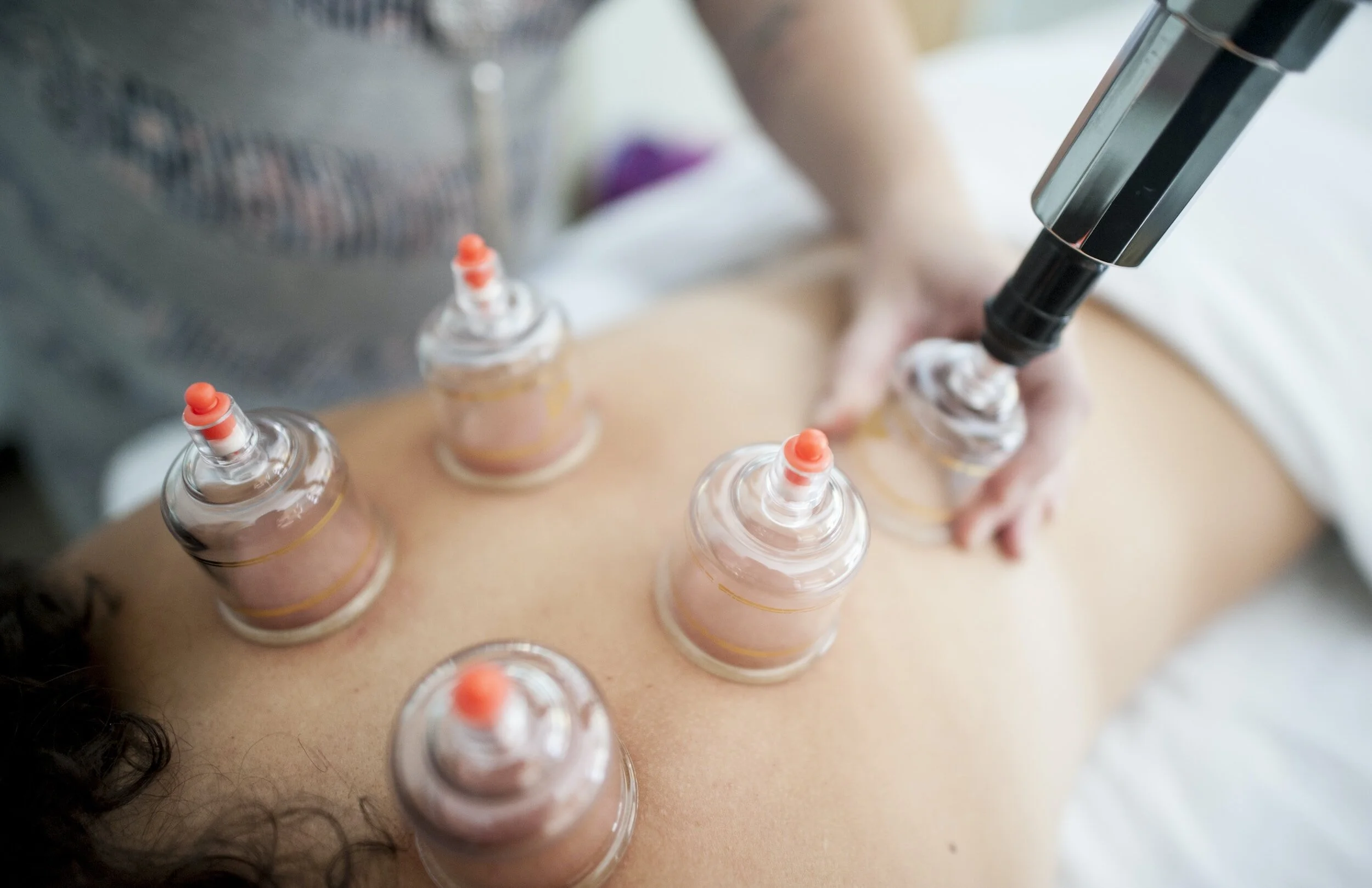
Types of cupping we offer
Fire cupping — The traditional method, in which a flame is briefly introduced into a glass cup to create a vacuum before placement on the skin. Fire cupping produces a strong, consistent suction and is particularly effective for deep tissue release, respiratory conditions, and significant areas of stagnation or chronic tension. Despite its name, fire cupping does not burn — the flame is used only to create the vacuum, not applied to the skin.
Stationary cupping — Cups are placed and left in position for several minutes to allow deep tissue release and increased local circulation. Particularly effective for chronic tension, fascial adhesions, and targeted pain relief.
Moving cupping — Oil is applied to the skin and cups are glided across larger muscle groups — the back, hamstrings, IT band — in a technique that combines the benefits of cupping with a massage-like movement. Highly effective for broad areas of muscular tightness and athletic recovery.
Benefits of cupping therapy
Cupping produces therapeutic effects that are genuinely distinct from other forms of bodywork — reaching tissue depths and creating physiological responses that hands alone cannot replicate:
Pain relief — including chronic back pain, neck and shoulder tension, hip tightness, and musculoskeletal pain patterns that have been resistant to other treatment
Deep muscle release — cupping lifts and separates fascial layers, releasing adhesions and restrictions that compression-based massage cannot fully address
Improved circulation — suction dramatically increases local blood flow, delivering oxygen and nutrients to tissue while clearing metabolic waste
Respiratory support — cupping on the upper back is a classical treatment for congestion, bronchitis, asthma, and respiratory infections, loosening mucus and opening the chest
Stress reduction and nervous system regulation — the parasympathetic response triggered by cupping produces deep relaxation that extends well beyond the session itself
Detoxification — bringing stagnant blood and metabolic waste to the surface supports the body's natural clearing processes
Athletic recovery — reducing post-exercise soreness and accelerating tissue repair between training sessions
Tight neck and shoulders — one of the most common and immediately dramatic applications of cupping, often producing relief in a single session that other therapies have not achieved
About the cupping marks
Cupping frequently leaves circular marks on the skin that can range from light pink to deep red or purple. These are not bruises — they are an important distinction worth understanding. Bruises are caused by trauma that damages tissue. Cupping marks are caused by increased circulation and the movement of stagnant blood from deep tissue to the surface — a therapeutic response, not an injury. They typically fade within three to seven days and are painless to the touch. The darker the mark, the more stagnation was present in that area — and most clients find that marks become lighter with regular cupping as circulation improves over time.
Who performs cupping at Meadow Hill Wellness?
Our licensed acupuncturists incorporate cupping as part of a Traditional Chinese Medicine treatment plan, often combining it with acupuncture needling for comprehensive pain management, respiratory support, and systemic rebalancing. Cupping within an acupuncture session is guided by TCM diagnostic principles — placing cups along meridian pathways and areas of identified stagnation.
Both as a standalone appointment and as an add-on to an existing session, cupping is available to book directly. If you are unsure which context is right for you, our front desk can help you determine the best fit based on your primary concerns.
Who is cupping therapy for?
Cupping is appropriate for a wide range of clients and conditions:
Anyone dealing with chronic neck, shoulder, or back pain
Athletes seeking faster recovery and improved performance
Clients with respiratory conditions including congestion, asthma, and frequent illness
Anyone whose muscle tension has not fully responded to massage alone
Clients receiving acupuncture who want to deepen and extend their treatment effects
People managing stress, fatigue, or nervous system overload
Anyone curious about this ancient practice and its modern therapeutic applications
Frequently asked questions about cupping therapy
Does cupping hurt?
Most clients find cupping comfortable — the sensation is one of pulling or suction rather than pain. The intensity can always be adjusted by your provider. Moving cupping tends to feel more like a deep massage, while stationary cupping produces a sustained pulling sensation that most clients find deeply relaxing once they settle into it. Please communicate with your provider throughout your session if you need the suction reduced.
How long do cupping marks last?
Cupping marks typically fade within three to seven days. First-time cupping clients and those with significant stagnation or chronic tension often see darker marks that take closer to a week to clear. With regular cupping, marks generally become lighter and fade more quickly as circulation improves.
Is fire cupping safe?
Yes — when performed by a trained practitioner, fire cupping is completely safe. The flame is used only briefly inside the cup to create a vacuum and is never in contact with the skin. Our providers are experienced in both fire and silicone cupping and will recommend the most appropriate technique for your session.
How is cupping different from massage?
Massage therapy works by compressing tissue — applying pressure downward into muscle and fascia. Cupping works in the opposite direction — lifting and decompressing tissue through suction. This creates a fundamentally different therapeutic effect, reaching fascial layers and tissue depths that compression cannot access. The two therapies are highly complementary and many clients receive both within a single session.
Can I have cupping if I bruise easily?
Please inform your provider if you bruise easily, take blood thinners, or have a bleeding disorder before your session. Your provider can adjust suction levels significantly and will always err on the side of caution. Cupping is generally not recommended over areas of broken skin, active inflammation, or varicose veins.
How often should I have cupping?
For acute concerns — a stiff neck, post-workout soreness, or a respiratory infection — one to two sessions close together often produces significant relief. For chronic pain or ongoing athletic recovery, regular cupping every one to two weeks typically produces the best cumulative results. Your provider will recommend a frequency based on your specific situation.
Can I add cupping to my existing acupuncture appointment?
Yes — cupping is available as an add-on to acupuncture sessions at Meadow Hill Wellness. Let us know when booking and your provider will incorporate it into your treatment time.
Cupping Therapy
Cupping therapy is one of the oldest and most effective forms of bodywork available for pain relief, muscle tension, respiratory health, and deep tissue recovery.
What is cupping therapy?
Cupping is an ancient healing practice used for thousands of years across Chinese, Middle Eastern, and Egyptian medicine traditions. It uses cups placed on the skin to create suction — lifting and separating the layers of tissue beneath the surface rather than compressing them as hands-on massage does. This decompressive effect increases blood flow to targeted areas, releases fascial restrictions, draws stagnation to the surface, and activates the body's natural healing response in ways that compression-based therapies cannot reach.
At Meadow Hill Wellness we offer both traditional fire cupping and silicone cupping, and use stationary, moving, and combination techniques depending on what your body needs. Your provider will assess your condition and select the most appropriate approach for your session.